The Danish amplifier hiding inside your StormAudio rack

If you have a StormAudio PA 16 in your client's rack, you own a Pascal amplifier. If you have a PA 8 Ultra MK2 driving the surrounds, that's also a Pascal amplifier. And if you've been watching the trade press over the last few weeks, you'll have noticed StormAudio's new Impulsion 8 — the 8-channel, Dante-enabled, 2RU monster that won Best of Show at CEDIA 2025 and started shipping this April. That one runs on Pascal too.

You've probably never heard of Pascal Audio. That's by design. The Danish company has spent twenty years powering some of the most respected names in pro audio, custom install, and high-end hi-fi without ever putting its name on the box. If you specify StormAudio, you're already a customer. You just didn't know it.

This is the story of how a small Copenhagen amplifier company became the quiet engine behind premium home cinema, and why the new Impulsion 8 is the moment that story becomes worth telling.

The platform you've been using without knowing

Pascal Audio A/S was founded in February 2006 in Copenhagen. The first prototypes were hand-built in a small lakeside cabin north of the city by a team of engineers with deep roots in Denmark's Class D ecosystem — the same ecosystem that gave the world Bang & Olufsen's ICEpower division and, later, Bruno Putzeys's Hypex and Purifi work. Pascal's founders chose a different path from the start. Rather than chasing the audiophile DIY market or building finished amplifiers under their own brand, they decided to be an OEM and ODM supplier to professional and custom-install manufacturers.

Twenty years on, Pascal modules are inside products in more than 70 countries. Around 90 employees in Copenhagen design and ship amplifier modules to brands the audience for this article will recognise immediately: Dynaudio, Jeff Rowland Design Group, Aavik Acoustics, Procella Audio, and — most importantly for Modal AV's clients — StormAudio.

The reason you've never heard of Pascal is the reason it's so widely used. It is, in the words of Stereophile's Rogier van Bakel, the equivalent of a session musician: essential to the performance, practically invisible to the audience.

The first is UMAC — their proprietary Class D amplifier topology. Without getting lost in the maths, UMAC is optimised for power density and dynamic headroom. Pascal's modules run extremely high voltage rails relative to their continuous RMS power rating, which means they can deliver enormous transient peaks well above their nominal output before they run into trouble. That matters for film soundtracks, where the difference between a controlled cinematic explosion and a clipped, ugly mess is exactly the kind of headroom Pascal designs for.

The second is UREC — their universal switch-mode power supply with active power factor correction. UREC supplies are auto-adaptive across 100–240V mains, which is why Pascal-equipped amplifiers ship globally without regional variants. They also run cool enough to live inside speaker cabinets and dense rack chassis without elaborate heatsinking, which is exactly what custom install needs when amplifiers go inside joinery, plant rooms, and ventilated AV racks.

A standardised 26-pin interconnect ties the whole platform together. That sounds dry until you realise what it enables: a manufacturer like StormAudio can build a 16-channel chassis around four UREC supplies and a stack of UMAC modules, swap a power supply if one ever fails in the field, and re-use the same DSP front-end across multiple products. It's modular design taken seriously, and it's why Pascal has become the platform of choice for brands that need to deliver a lot of clean channels in a sensible footprint.

What Pascal actually makes

Pascal builds two things, and almost everything else flows from them.

The philosophical split that explains everything

The two more famous Class D module makers — Hypex and Purifi — both grew out of Bruno Putzeys's work, first at Philips, then at Hypex (where he designed the NCore platform), and finally at Purifi (which he co-founded with Lars Risbo and Peter Lyngdorf). Putzeys's engineering obsession is feedback loop optimisation and absolute distortion reduction. Purifi's Eigentakt modules achieve THD+N figures below 0.0002% across the audio band — so low they're effectively at the limit of what test equipment can measure. That's the audiophile bragging-rights game, and Hypex and Purifi play it brilliantly.

Pascal made a different bet. Their UMAC modules don't chase those distortion figures. Instead, they prioritise power density, thermal efficiency, dynamic headroom, and the kind of bulletproof reliability that pro audio touring engineers and 24/7 commercial installations actually need.

Van Bakel's framing in Stereophile captures it perfectly. Purifi asks how perfect amplification can be made; Pascal asks how much clean power can be reliably delivered in the smallest possible space. For a £24,000 pair of two-way active monitors, Purifi might be the right answer. For a 16-channel Atmos cinema where every channel needs to drive a Procella or Perlisten flat to 20Hz with all channels driven simultaneously, Pascal is exactly the right answer. Different problems, different optimisations.

This is the part of the story that custom installers should care about. In our world, the amplifier doesn't get the room to breathe that a hi-fi power amp does. It lives in a rack with twelve other things, often behind a closed door, sometimes in a converted understairs cupboard. It needs to sustain real power into difficult loads for hours at a time without thermal protection kicking in halfway through Dune. That's the brief Pascal was designed for.

StormAudio is open about the relationship in a way most of Pascal's customers aren't. Their PA 16 product page states it directly: developed in close partnership with the Danish company Pascal Audio, StormAudio's commitment to reliable, controllable, and high-quality sound is embodied in the Class D technology used in our amplifiers. When StormAudio's engineers talked to StereoNET about the choice, they were even more specific: Pascal UMAC modules were chosen for their reliability and for sound characteristics — neutrality and dynamics — that StormAudio felt matched home cinema requirements better than the alternatives.

Look inside a StormAudio PA 16 MK3 and you'll find four Pascal UREC power supplies feeding sixteen UMAC channels in a 3RU chassis, delivering 200W per channel into 8 ohms with all channels driven simultaneously. That last phrase matters. Most multi-channel amplifier specs cheat by quoting two channels driven, or one channel into a brief test tone. StormAudio's PA range can sustain its rated power across every channel at the same time, which is the only number that matters when you're driving a 9.4.6 Atmos system at reference level.

The PA 8 Ultra MK2 takes the same Pascal platform and concentrates it into eight channels for higher per-channel power. Combined with an ISP processor at the front end, these are the amplifiers behind some of the most ambitious private cinema installations in the UK. That includes plenty of Modal AV's own projects.

But the real reason to write this article now is the Impulsion 8.

How StormAudio uses Pascal

The Impulsion 8 — Pascal goes networked

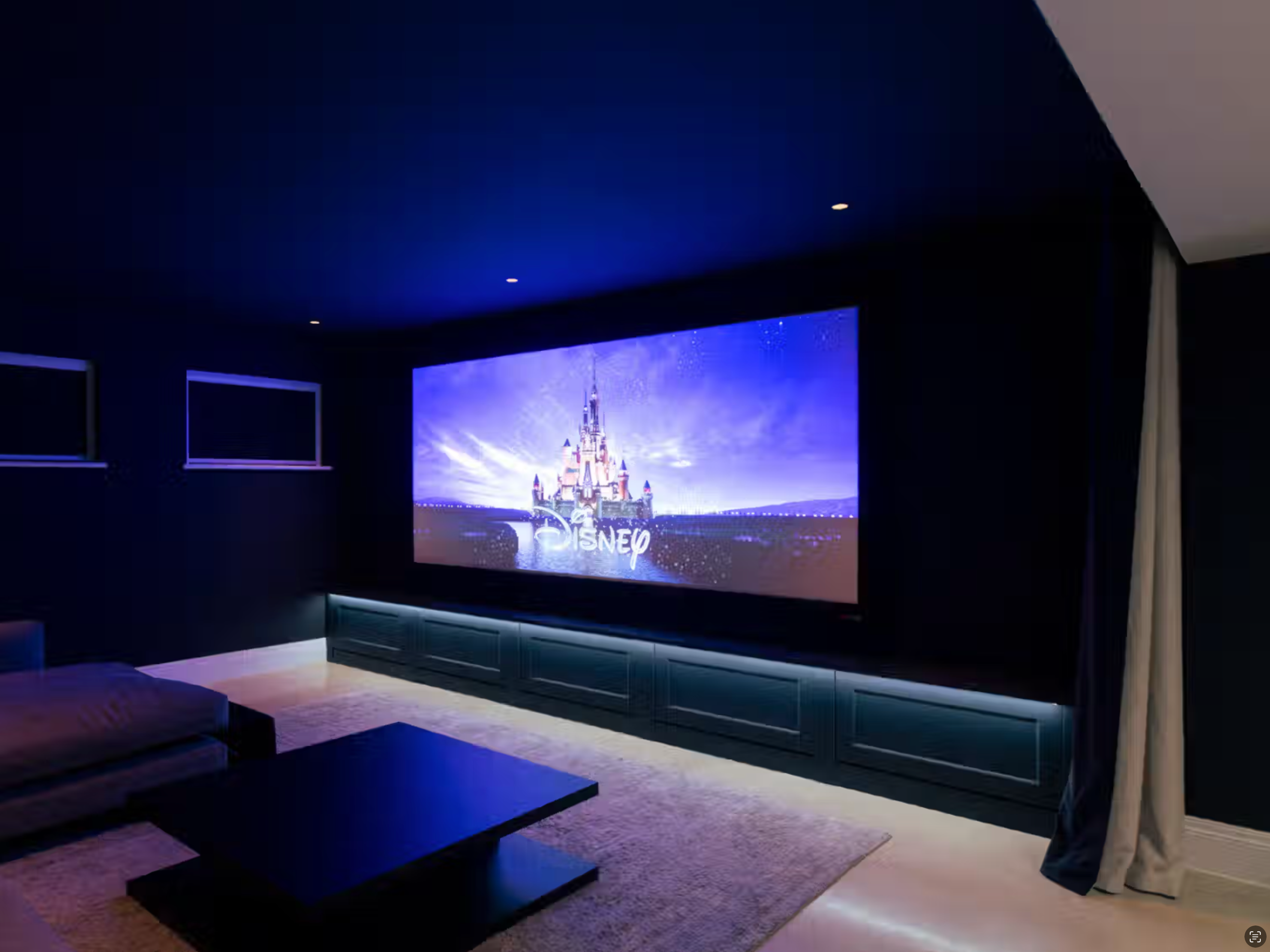
Luxury home cinema media room with StormAudio AV equipment on a custom wall-mounted console

StormAudio formally launched the Impulsion 8 in March 2026 after winning Best of Show at CEDIA 2025 with a preview unit. It started shipping in April. It's the most interesting amplifier in the StormAudio range right now, and it's the clearest indication of where the Pascal partnership is going.

On paper, the headline numbers are familiar StormAudio territory. Eight channels in a 2RU chassis. 200W per channel into 8 ohms with all channels driven. 800W bridged into 8 ohms, 1,200W peak bridged into 4 ohms. A single 3,600W UREC power supply. ESS Sabre HyperStream IV DAC stage feeding the Pascal UMAC output modules. CEO Olivier Thumerel summarised the brief succinctly: with the Impulsion 8, StormAudio wanted to prove you don't need a massive footprint to achieve reference-level performance.

What makes the Impulsion 8 different from anything else in the StormAudio range — and from almost anything else on the CI market — is the input stage. The Impulsion 8 has Dante and AES67 networked audio inputs. A single Cat6 cable carries up to 64 channels of uncompressed digital audio from the StormAudio ISP processor straight into the amplifier. There are no analogue interconnects. No XLR runs across the rack. No ground loops, no impedance mismatches, no cable-quality debates. The audio signal stays in the digital domain from the ISP's output stage all the way to the DAC inside the Impulsion 8 itself, where it's converted at the very last possible moment before hitting the Pascal output stage.

For installers who've spent the last decade running balanced analogue between processors and power amps, this is a meaningful shift. Dante isn't new — it's been the standard in pro audio for years — but until now it's been rare in residential CI amplifiers at this performance tier. The Impulsion 8 is one of the first products that brings the AoIP world fully into a high-end home cinema rack, and it does so on top of a Pascal amplifier platform that we already know and trust from the rest of the StormAudio range.

There's also future-proofing baked in. StormAudio has confirmed that DSP features — parametric EQ, FIR filters, output limiters — will be enabled via firmware updates later in 2026. That's the same software-defined approach that StormMonitoring brings to fault detection and remote diagnostics across the rest of the range. Buy the hardware now, and the unit gets more capable over its lifetime rather than becoming obsolete.


The other names you'll recognise

StormAudio is the most relevant Pascal-powered brand for our clients, but it's not the only one worth knowing about. A short tour helps explain why the Pascal platform has earned its reputation:

Procella Audio

the Swedish home cinema speaker brand whose drivers turn up in serious private cinemas around the world — uses Pascal modules in its DA4280 amplifier. Procella's product page describes the unit as designed with Pascal A/S in Denmark and using their highly-acclaimed amplifier modules. If you've specified Procella, you've already heard Pascal. (unit is discontinued)

Dynaudio

uses Pascal modules across its Core professional studio monitor range and inside the £18,500-per-pair Confidence 20A active speakers. The Confidence 20A puts a 400W Pascal module on each woofer and a 150W module on each tweeter, hidden inside an aluminium speaker stand that doubles as a heatsink — exactly the kind of compact, thermally efficient application Pascal was designed for.

Jeff Rowland Design Group

has been using Pascal in its Class D amplifiers for over a decade. The Continuum S2 integrated amplifier sources its power section from Pascal of Denmark, yielding 400 watts per channel into 8 ohms, doubling into 4 ohms, with a peak current of 21 amps.

The pattern is clear. Pascal sits inside products from £1,500 install amplifiers to £40,000 audiophile statements. The reason it scales like that isn't marketing — it's that the underlying engineering is genuinely good, and it's flexible enough to be optimised differently for different problems.

Most clients spending six figures on a private cinema have no idea what's inside their rack. They trust the brand on the front panel, they trust their integrator, and they assume the rest takes care of itself. That's a reasonable position to take, but it's also why understanding the supply chain is part of what separates a thoughtful integrator from a box-shifter.

The Pascal story is a good example of why this knowledge is worth having. When we specify a StormAudio PA 16 MK3 for a 16-channel Atmos room, we're not just choosing StormAudio. We're choosing the Pascal UMAC platform that sits inside it — a platform with twenty years of pro audio reliability behind it, that's also powering studio monitors at Skywalker Sound and active speakers in audiophile listening rooms in Tokyo. When we move a project to the new Impulsion 8, we're choosing a product that takes that proven platform and bolts on Dante/AES67 networking, which removes a whole class of installation headaches and future-proofs the rack against the way commercial AV is heading.

The engineering trade-offs Pascal made twenty years ago — power density over distortion bragging rights, integrated power supplies over external boxes, modular interconnects over fixed designs — turn out to be exactly the trade-offs that modern custom installation needs. That's not luck. That's a design philosophy that aged well.

It's also a useful reminder that the interesting technology in this industry isn't always on the front panel. Sometimes the most important decision a manufacturer makes is which Danish amplifier company they pick up the phone to.

Why this matters if you're spending serious money on a system

The bottom line for installers

If you're already specifying StormAudio, nothing about this article changes what you do tomorrow. The PA 16 MK3 and PA 8 Ultra MK2 remain the workhorses they've always been, and they remain Pascal-powered. What changes is the conversation you can have with clients who want to understand what they're paying for.

If you're considering an upgrade path for a client's existing system, the Impulsion 8 is worth a serious look. The combination of Pascal amplification, Dante/AES67 networking, and StormAudio's processor ecosystem opens up architectural possibilities — distributed amplification, simplified rack wiring, future DSP capability via firmware — that the older PA range doesn't offer in the same way.

And if you're new to StormAudio, the Pascal connection should give you confidence. It's not a black box. It's a known, respected, twenty-year-old amplifier platform that happens to be perfectly suited to the demands of high-end home cinema, hidden inside a French processor company that happens to be one of the best in the business at multichannel immersive audio.

Pascal will probably never be a household name. After a brief and unsuccessful detour into selling its own consumer brand under the Blaze Audio label — a venture it sold to Sonance in July 2025 to refocus on its core ODM business — it's gone back to doing what it does best: making the amplifiers that other companies put their name on. If you want to hear Pascal at its best, you already can. You probably already have.

You just need to know where to look.

Modal AV is a CEDIA-accredited smart home and AV integrator based in Maidenhead, Berkshire, serving London and the Home Counties. We specify StormAudio across our private cinema and immersive audio installations, and we're always happy to talk through the engineering choices that go into a high-end system. Get in touch to discuss your project.

Ready to transform your space?

Tell us about your project and we'll come back to you with ideas — no obligation, just a conversation about what's possible.