

Replacing an end-of-life iLight system
Honest advice and practitioner-grade work for owners of iLight lighting control systems facing the end of Signify's support window — across London and the Home Counties.
In May 2025, Signify announced that the iLight lighting control range had been transitioned to Philips Dynalite. End of sales was 1 September 2025; bug fixes for the existing software continue until 23 December 2028. The product has not been abandoned, but it is no longer sold, and any owner of an iLight system now has a multi-year decision to make. The Signify-recommended migration path is Philips Dynalite. For premium UK residential projects, Lutron HomeWorks QSX is often the better answer — especially where existing DALI fittings can be retained and the homeowner expects a residential-grade interface, keypad finish range, and aftercare ecosystem. Modal AV are CEDIA-accredited Lutron HomeWorks specialists working across London and the Home Counties, and we are happy to give honest advice on which path is right for a specific home before any commitment.
What's happened to iLight
In plain English
Signify, which owns the iLight brand alongside Philips lighting and Dynalite, announced on 20 May 2025 that the iLight range was being transitioned to Philips Dynalite. End of sales for both iLight hardware and software was 1 September 2025. Ad-hoc bug fixes for the existing software continue until the last date of support on 23 December 2028. The official Signify End of Life announcement is available as a PDF here.
This is a transition, not an abandonment. Signify's stated migration path is Philips Dynalite, and for many commercial and large-format hospitality projects that's the right answer — Dynalite is a capable, mature wired control platform with a deep installer ecosystem in the UK.
For owners of existing iLight systems, "end of life" means something more nuanced than the headline suggests:
- The product is no longer being sold.
- New spares come from third-party stocks until they are exhausted.
- Bug fixes for the software are ad-hoc and finite — only until late 2028.
- Major modifications (new zones, replacement keypads, integration with new equipment) become progressively harder.
- Insurance, sale and re-letting checks on a property may flag an end-of-life smart home system as a defect to be addressed.
The decision is not "must we replace it now?" It is "when, and with what?" For some homeowners, three to five years' careful management is fine. For others — where the iLight system is already drifting, where scenes have become unreliable, or where a wider refurbishment is on the cards — replacing the controllers is the cleaner path.
Why we chose Lutron Homeworks QSX over the Dynalite migration path
The default recommendation from Signify is Dynalite, and we considered it carefully. For this client, in this apartment, with this UX expectation, Lutron HomeWorks QSX was the better answer. Three things tipped the decision: the residential interface and keypad finish range, the integration depth with Lutron Sivoia shading and Crestron Home, and the strength of the UK Lutron HomeWorks programmer and aftercare ecosystem. None of these make Dynalite a poor product — they reflect the specific weight residential clients place on tactile interaction, scene quality, and post-handover support.
The honest read on the comparison is this. If you specify across hotels, offices and mixed-use, Dynalite is on home turf. If you are dealing with a premium residential apartment or family home where the homeowner notices the difference between a keypad finish that's right and one that isn't — and where the existing DALI luminaires are worth keeping — Lutron HomeWorks QSX is usually the better answer. If you are running an AV-heavy bespoke installation with unusual logic requirements, programmed Crestron earns its keep. We're glad to give a project-specific recommendation rather than a brochure-led one.
How a Modal AV iLight replacement works
Every project is different. The general shape of a Modal AV iLight replacement, from first conversation to the day we leave you with the new system, looks like this. Most projects sit somewhere between four months and twelve months end-to-end, depending on scope and the wider refurbishment programme.
We start with a no-cost, no-commitment conversation — usually a 30-minute call, sometimes a site visit. The aim is to understand what's there, what's working, and what isn't. We'll need to know roughly when the iLight system was installed, the number of keypads and zones, whether the luminaires are DALI, the building type (freehold house, leasehold apartment with managed HVAC, etc.), and what's prompted the conversation. We can usually tell you within the first hour whether a like-for-like replacement, a Lutron HomeWorks QSX retrofit, or a Dynalite migration is most likely the right answer.
If we move forward, the next step is a paid survey. An engineer attends site for half a day to a full day, depending on scale, and produces a documented audit of the existing system — control hardware inventory, DALI driver schedule, network and AV infrastructure, and (where relevant) the building's HVAC controller and BACnet structure. This audit is yours regardless of whether you go on to commission the work. It is also a useful document for an insurance review or property sale.
We then produce a design proposal: system architecture, DALI group plan, keypad schedule with finishes, scene language, network topology, and where relevant the BACnet object schedule. The proposal includes indicative pricing for the new equipment, installation, and aftercare. For projects with an architect or interior designer involved, the proposal is issued as a coordinated set of drawings aligned to the relevant RIBA stage.
For projects with a wider refurbishment, we coordinate directly with the architect, interior designer, M&E consultant and main contractor. Conduit, plant location, sequencing of works and BACnet boundaries with the building's management are agreed before anything is ordered. The earlier we are involved, the cleaner this stage runs — we are happy to attend design meetings at concept stage at no charge.
Where the project allows, we build and pre-test the rack off-site. This reduces on-site time, isolates risk, and lets the homeowner or contractor walk in to a known-good system rather than a build-in-place. For an apartment of penthouse scale, the off-site stage is typically a week of bench work.
The on-site programme depends on whether the property is occupied. For an empty unit at apartment scale, on-site installation is typically two to four weeks. For an occupied home, expect a longer programme broken into discrete site days, scheduled around the household. The strip-out of the legacy iLight controllers is the first morning's work; the new rack arrives on day one or two; keypads, blinds and network deployment follow.
Commissioning is where a careful integrator earns the fee. DALI addressing, scene programming, BACnet point mapping with the building's BMS engineer, Wi-Fi tuning, end-to-end testing of every keypad and every scene. Handover is a walkthrough with the homeowners and their housekeeper, supported by a printed quick-reference guide and a direct line to a person, not a portal. Every Modal AV project moves into our SMARTmaintenance programme on handover, with quarterly remote checks and an annual on-site visit.
Worked example: a South Bank penthouse
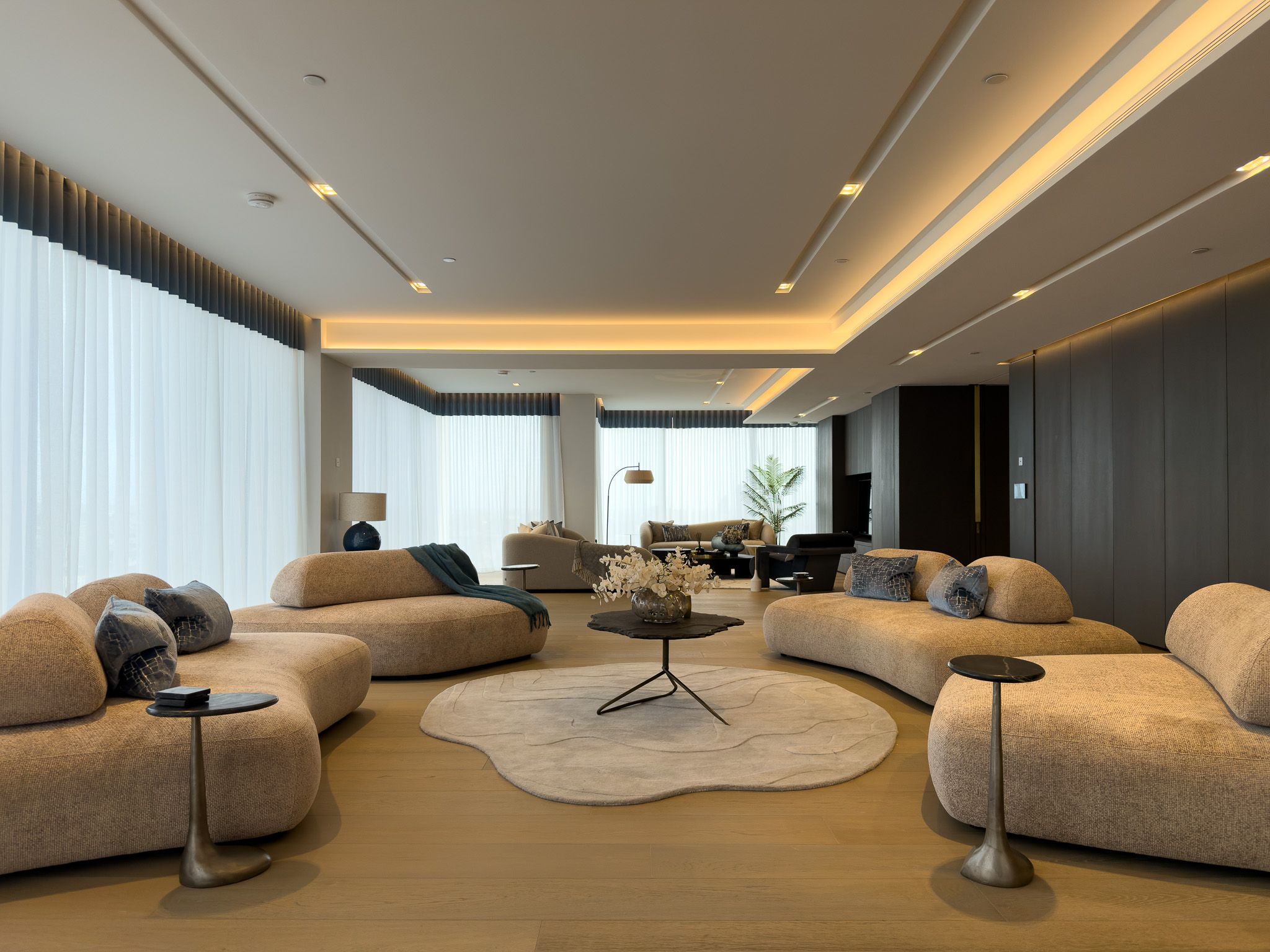
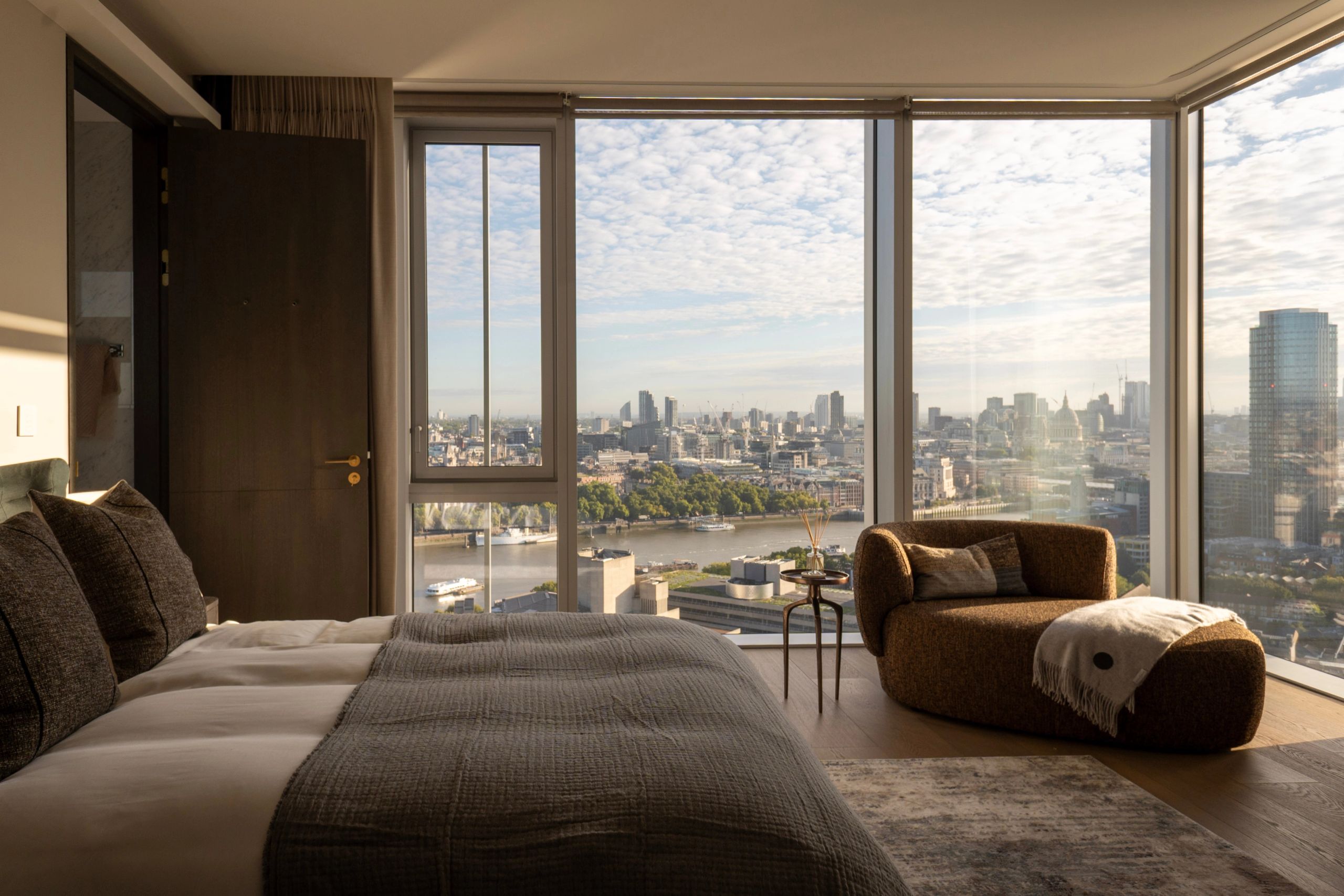
The clearest way to understand how a Modal AV iLight replacement works in practice is to look at a recent one. A penthouse on the South Bank, overlooking the Thames, had a developer-installed iLight system that had drifted — scenes had become inconsistent, some keypads were intermittent, and the homeowners knew the product had been end-of-lifed. They wanted the apartment to feel right again, without disturbing the existing DALI luminaires or rewiring the building.
Modal AV removed the original iLight controllers, retained the existing DALI fittings throughout the apartment, and installed Lutron HomeWorks QSX driving 30 Palladiom keypads and approximately 78 DALI groups. Crestron Home OS 4 on a CP4-R processor took over the wider automation. Lutron Sivoia QS roller blinds joined the same control surface. The building's Sauter ecos 504 HVAC controller was integrated over BACnet/IP. A Ubiquiti UniFi network with Wi-Fi 7 underpins the lot.
The technical detail: retaining DALI fittings, replacing the brain
This section is written primarily for architects, interior designers, M&E consultants and other smart home integrators evaluating a similar retrofit. Homeowners are welcome to skim. If your project doesn't involve existing DALI infrastructure, much of this still applies — the principles are the same.
The instinct on a lighting control retrofit is to look at the cost of a new brain and start adding up the cost of new luminaires too. That instinct is often wrong. Where the original system was installed by a careful lighting designer, the luminaires and their wiring are usually worth keeping. The work is to replace the parts that have aged — the controllers — while preserving the parts that haven't.
Lutron HomeWorks QSX handles DALI natively through two DIN-rail modules. The LQSE-1DAL2-D is a single DALI-2 bus supporting 64 addressable loads per bus. The LQSE-2DALUNV-D handles two independent DALI buses with the same 64-load capacity per bus, 128 in total. Lutron's full DALI handling is described in Application Note 818.
The unsung benefit of Lutron's DALI implementation is dynamic group allocation. The system automatically re-groups DALI zones during a fade to minimise asynchronous behaviour between loads — the visible difference between a fade that feels right and one that doesn't. In a refurbishment where the original DALI drivers come from several manufacturers and several generations, this matters.
The careful work in a retrofit of this kind is the upfront audit. Each existing driver is confirmed against the DiiA Product Database to verify DALI-2 certification or, where applicable, to test DALI-1 behaviour with Lutron equipment. Where drivers are marginal, replacement is specified — but only where the data justifies it, not as a default.
For projects where the existing DALI infrastructure is in good order, this approach can cut the cost of the retrofit by a meaningful percentage compared with a full strip-out, and shorten the on-site programme by days or weeks. It is also less disruptive for occupied homes.
Speaking the building's language: BACnet HVAC integration
For apartments in managed riverside or central London developments, the HVAC plant belongs to the building, not to the homeowner. The schedules belong to the building's management. What a smart home retrofit can do — and what specifying M&E consultants should expect — is open a proper, two-way conversation with the building's HVAC controller, so the apartment behaves as part of the building rather than against it.
The pattern we see most frequently in this kind of building is a Sauter ecos 504, a freely programmable BACnet/IP controller from Sauter's EY-modulo 5 family. It manages temperature setpoints, occupancy and zone-by-zone ventilation across the apartment, and speaks BACnet/IP natively.
The Crestron CP4-R processor that runs Crestron Home OS 4 supports BACnet/IP natively — up to 2,000 BACnet objects out of the box, with no additional licensing required (see Crestron's CP4-R feature documentation). That headroom is well over what a residential apartment needs, which makes a direct integration possible rather than a workaround through a third-party gateway.
The practical work is object discovery and point mapping: identifying which BACnet objects on the building's side correspond to which Crestron Home thermostat objects, agreeing the read/write boundaries with the building's management team, and confirming the safeties stay under the building's control. The homeowner adjusts temperature from the Crestron Home app or any in-wall touchpanel, while the building's BMS retains overall authority — including any limits the freeholder imposes on setpoints or schedules.
This kind of integration is uncommon in UK residential work but normal in commercial work. The handover between the two disciplines is where careful integrators earn their fee.
Why Modal AV

Modal AV are CEDIA-accredited smart home and AV integrators based in Maidenhead, working across London and the Home Counties — including South Bank, Waterloo and the wider SE1 area. We are Lutron HomeWorks specialists, authorised Lutron Palladiom Wired Shading installers (one of a small group of UK integrators authorised for Palladiom Wired Shading), and Crestron Home installers. We work on Control4, Savant and KNX systems too.
What separates a careful integrator from a busy one is usually the upfront work. A well-documented survey. A clear design proposal. Honest advice on when a competitor's product is the better answer. Direct coordination with the architect, interior designer and M&E consultant. Off-site pre-stage where the project allows. Labelled racks and as-built drawings that anyone could pick up in five years' time. A direct line to a person for aftercare.
We are happy to attend an initial conversation at no charge, on the phone or on site, and to leave you with practical advice whether or not you go on to commission us. That is how we have always preferred to work.
Considering a similar retrofit?
If you live with an iLight system that has started to drift, or you are planning a refurbishment of a central London apartment and want the lighting and control to feel right from day one, we would be glad to talk. The first conversation is informal, on the phone or over a coffee.
Specifying for a client?
Architects, interior designers and M&E consultants are welcome to request the full technical project summary, including the DALI group plan, the BACnet point schedule, and the network architecture. We are happy to attend design meetings at concept or developed-design stage.
Ready to transform your space?
Tell us about your project and we'll come back to you with ideas — no obligation, just a conversation about what's possible.
