

Lighting and Shading
Recall useful scenes from a keypad, coordinate blinds and curtains with the room, and keep everyday controls consistent across the home.
for New Builds and Refurbishments
We work on substantial refurbishments and new builds across London, the Thames Valley and the wider South East, coordinating the technology with the architecture, interior designers and building services before decisions become expensive to change.
 Integrated media room in a country home
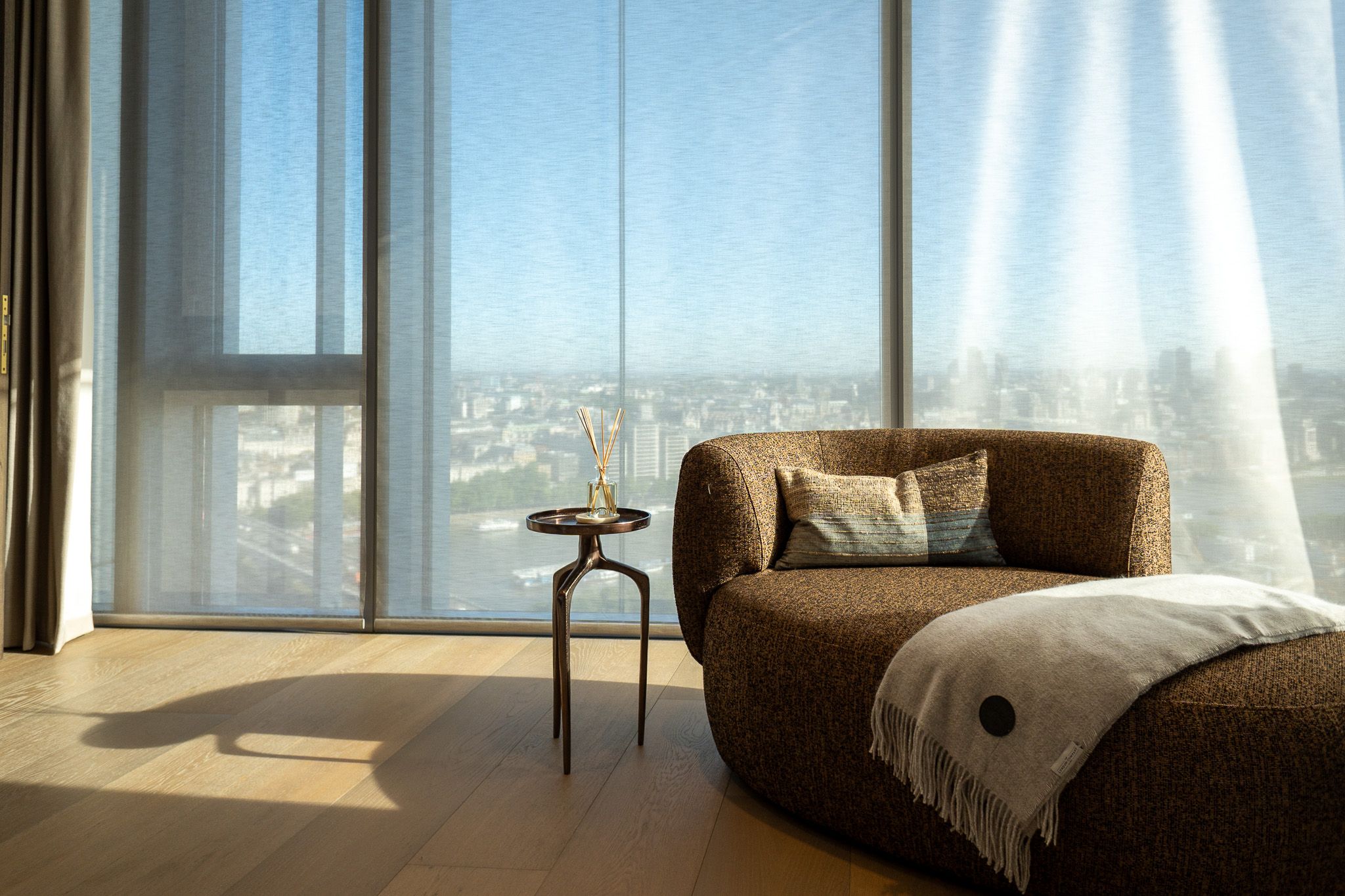
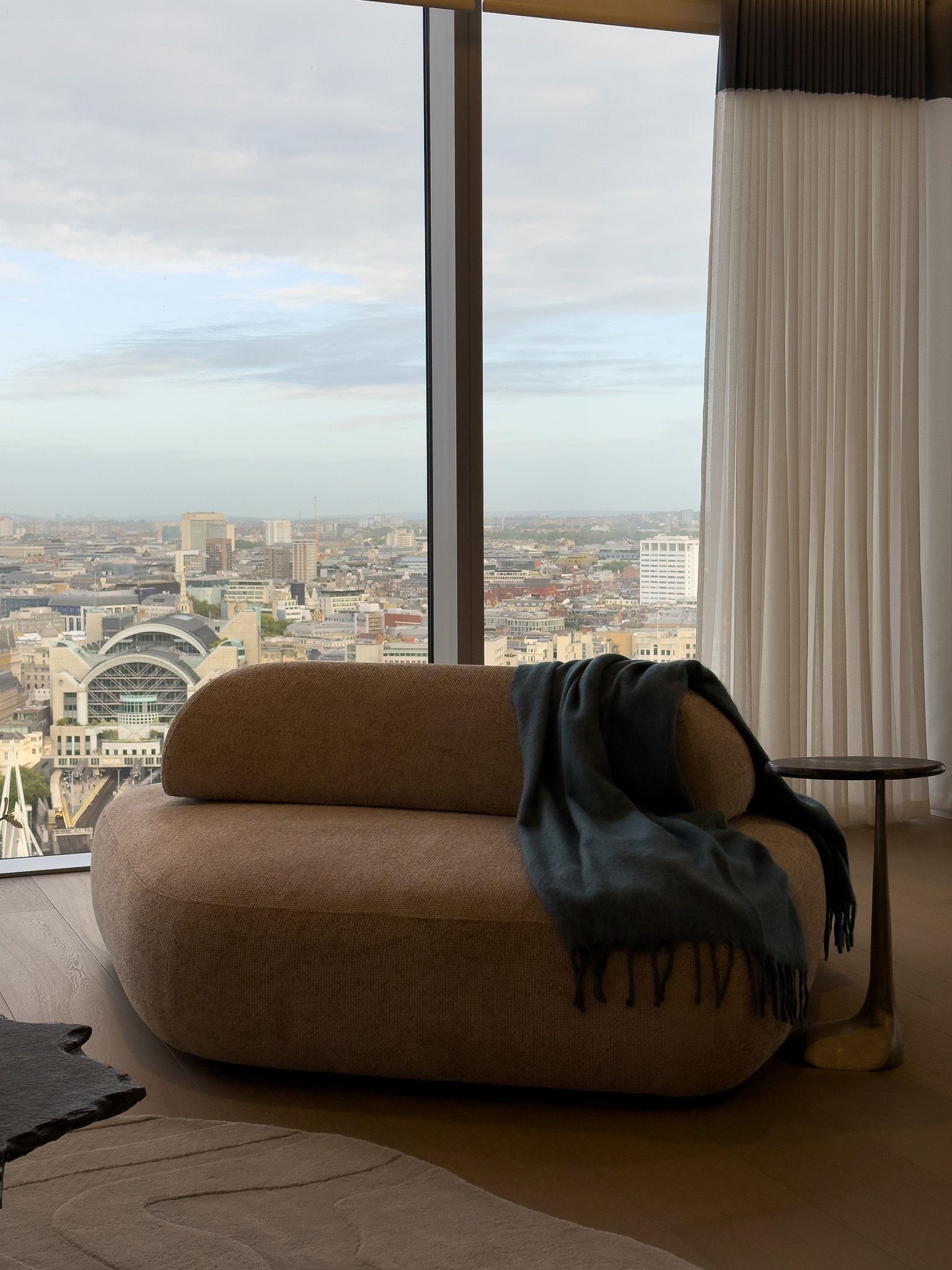 Automated curtains at the South Bank penthouse
 Lighting control keypad in a London home
Lighting, blinds, heating, music, television, gates and security may all come from different manufacturers. Home automation gives them a common set of controls and allows useful actions to cross those system boundaries.
A keypad by the door can prepare the house when you leave. An evening scene can adjust the lights and blinds together. The same interface can show whether a gate is open, change the temperature or choose music without asking you to remember which app controls which part of the home.
Physical controls remain where they are the quickest and clearest choice. Apps, touchscreens and voice control can then add detail without becoming the only way to operate the house.
Turn off selected lights and entertainment, adjust the heating and prepare the security system from one deliberate action.
Recall lighting and shading together, then choose music or television without rebuilding the room from separate controls.
Check integrated systems remotely and make the changes your installation permits, without exposing every device as a separate app.
These are illustrative control patterns, not promises that every project includes every function. The final scope depends on the connected systems and agreed brief.
The control system is one layer of the project. Its quality depends on the systems beneath it being selected, connected and commissioned as a coherent whole.
Recall useful scenes from a keypad, coordinate blinds and curtains with the room, and keep everyday controls consistent across the home.
Bring compatible heating, cooling and ventilation controls into the same room-based interface while respecting the responsibilities of the building-services system.
Choose music, television and shared sources by room without leaving a collection of remotes and applications behind.
View compatible cameras, gates, doors and alarm states from agreed interfaces while keeping the security system's core responsibilities clear.
Give control, entertainment and connected devices the wired and wireless foundation they need, with the important equipment documented and accessible.
Coordinate projection, sound, lighting and room control around the cinema experience rather than treating them as separate packages.
In a new build or substantial refurbishment, home automation affects the electrical layout, joinery, ceiling plans, heating controls, window treatments, equipment ventilation and network coverage. These decisions are easier to resolve while the project team can still act on them.
Modal AV works with the client, architect, interior designer, electrical team and building-services consultants to define:
what each room needs to do
cable routes and containment
keypad, touchscreen and equipment positions
rack access, ventilation and power
interfaces between lighting, climate, shading, entertainment and security
which contractor owns each connection and test
commissioning, documentation and handover requirements
Modal AV carries the system brief through planning, site coordination, programming and commissioning. Decisions made on drawings are checked against the building as work progresses, and changes are considered in relation to the wider system.
This creates a closer connection between what was specified, what the engineers install and what is documented at handover. The same project record then gives later support a clear starting point.
Resolving those boundaries early protects the architecture from avoidable changes and gives the engineers a system they can commission properly.
There is no default platform. Modal AV works with Control4, Crestron Home and Savant, selecting between them according to the property, its infrastructure, the required integrations, the preferred interfaces and how the system will be managed over time.
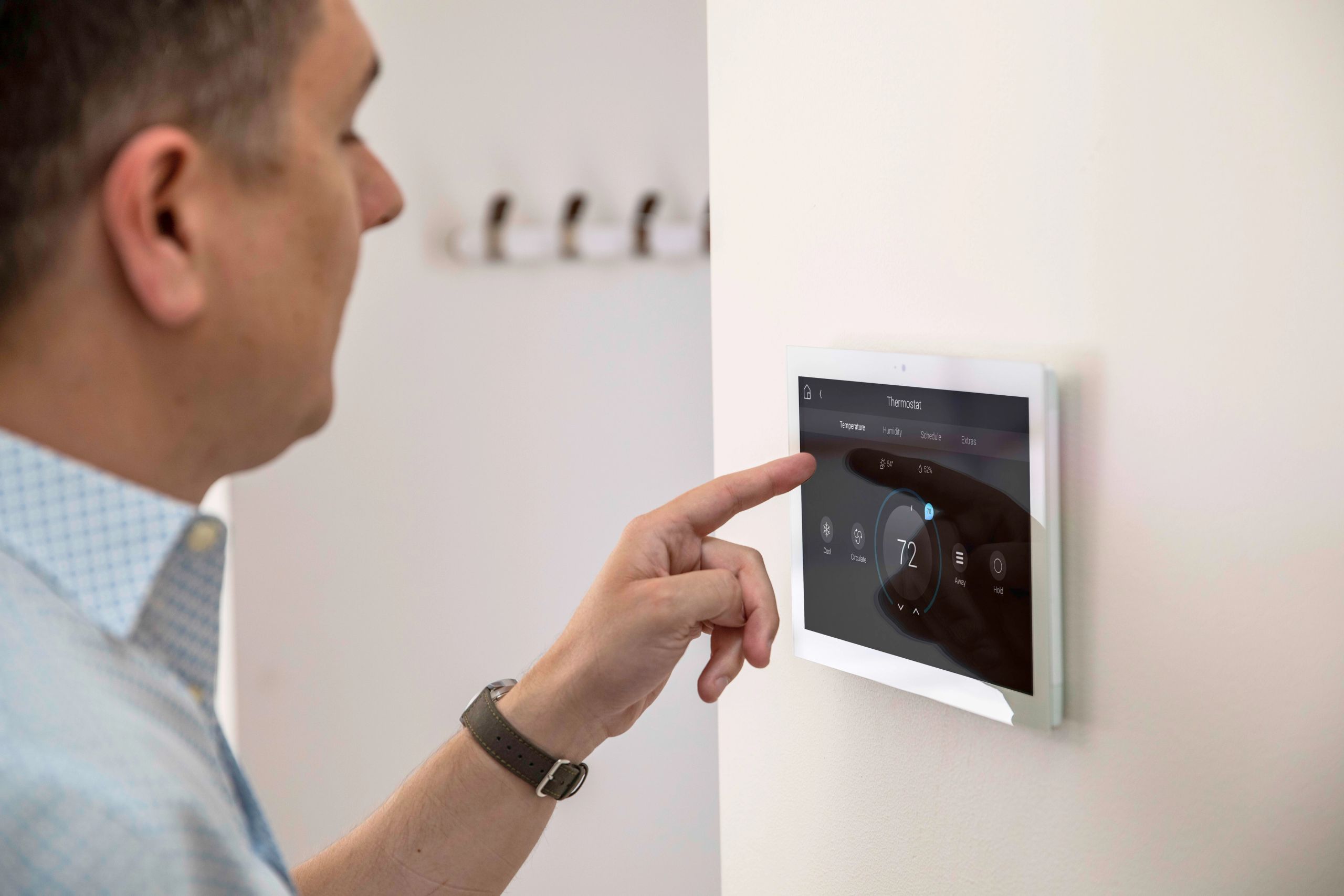
Control4 offers broad third-party integration and a consistent family of apps, remotes, touchscreens and keypads. It is often considered where flexible room-by-room control and a wide choice of connected products are priorities.
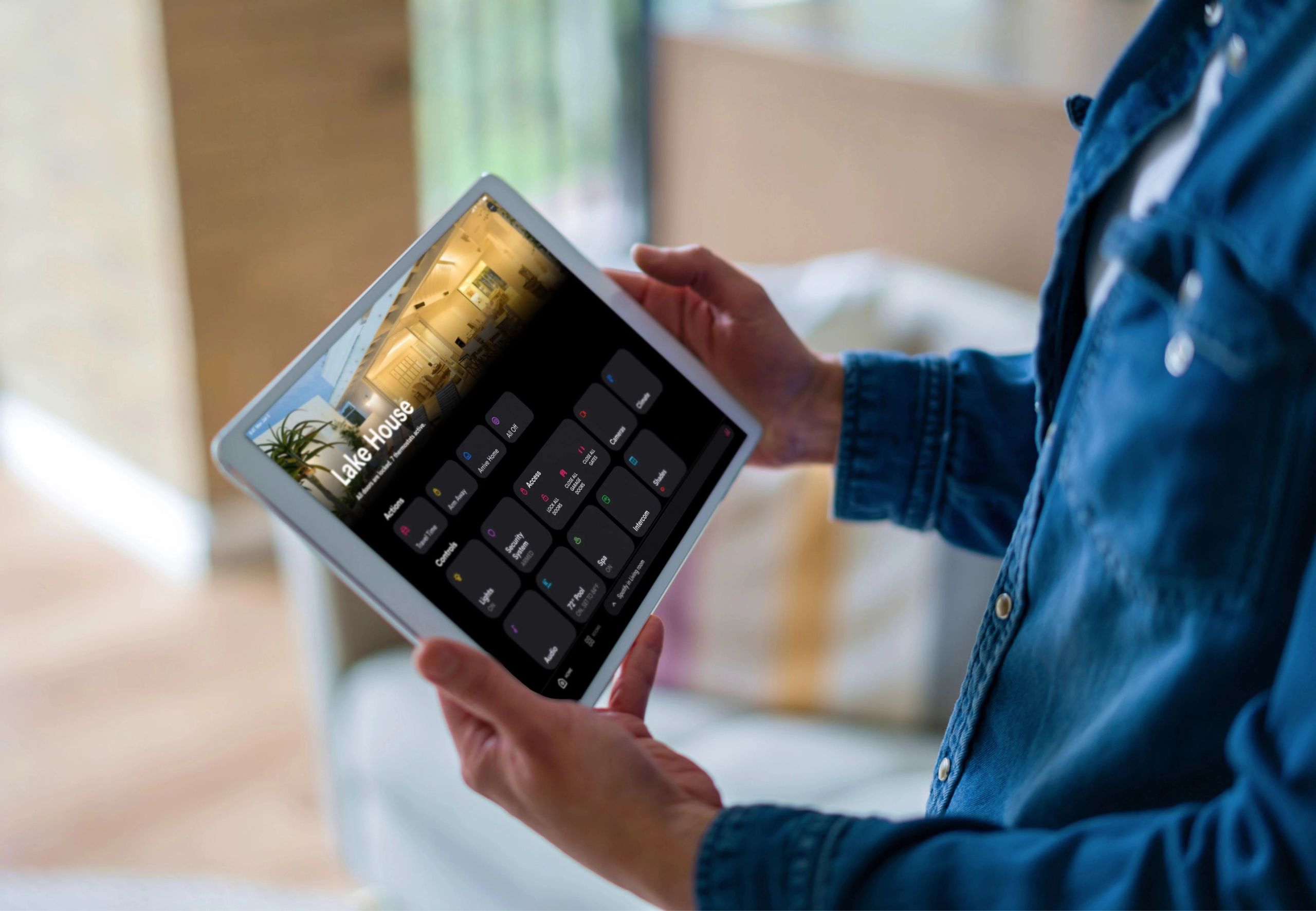
Crestron Home coordinates whole-home functions through a consistent set of room and property controls. It is often considered for larger or technically detailed residences where multiple building and entertainment systems need to share one interface.
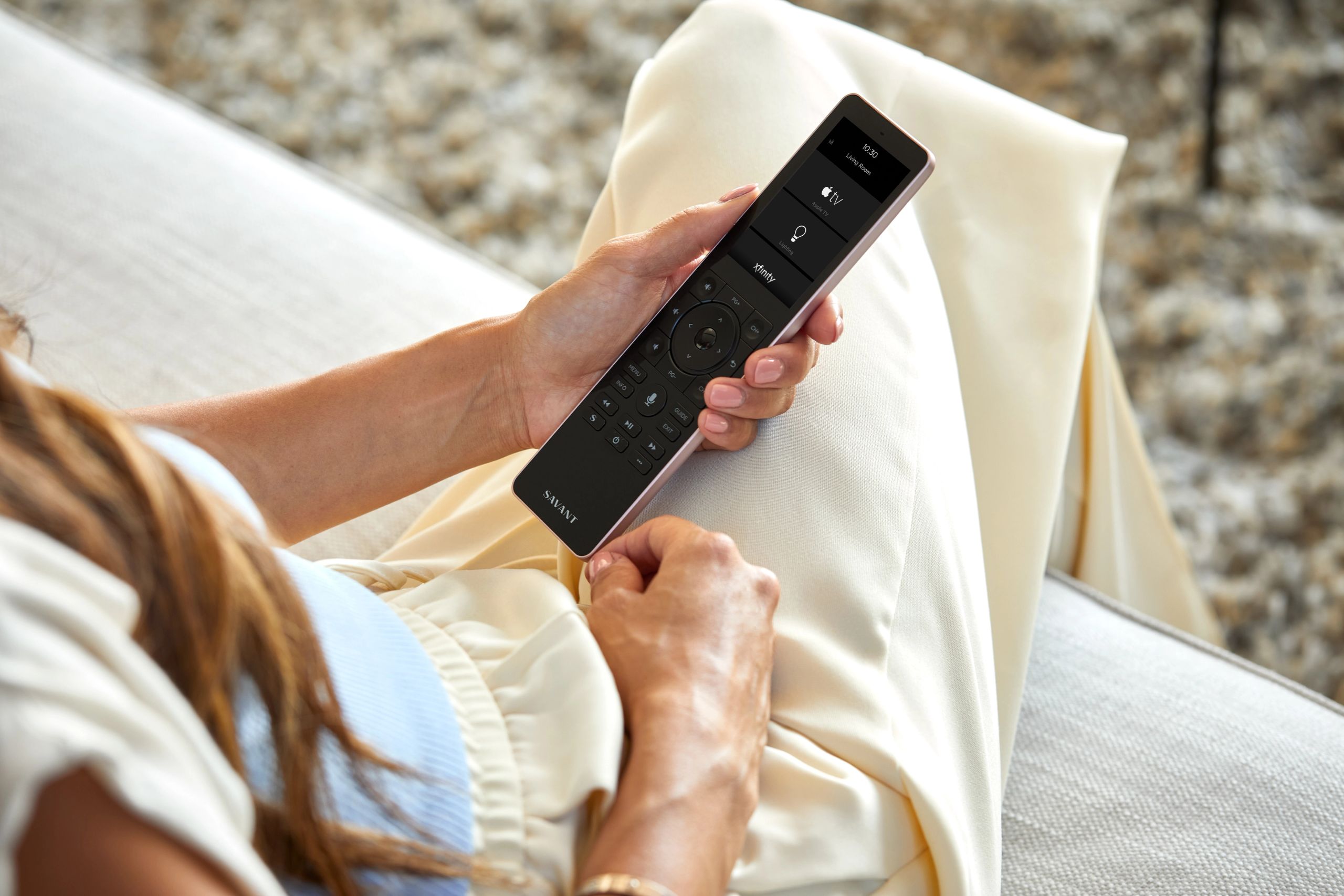
Savant takes a highly visual and personalised approach to whole-home control, with individual profiles, scenes and direct access to entertainment, lighting, climate and security from its app and remote.
Completed Project
At a Thames-facing penthouse in London, the brief was to replace an end-of-life lighting control system without disturbing carefully selected existing luminaires or rewiring the apartment.
Modal AV retained the DALI lighting, introduced Lutron HomeWorks QSX lighting control and Sivoia QS shading, integrated the building's HVAC through Crestron Home, and rebuilt the network foundation with UniFi. Keypads, app control and the plant-room infrastructure were coordinated as one documented system.
The work involved the homeowners, their interior designer, an M&E consultant and building management. It is a useful example of why automation belongs in the project conversation before equipment reaches site.
Modal AV home automation projects begin at £15,000 including VAT. A system forming part of a substantial refurbishment will typically involve an investment of around £50,000 including VAT.
New-build systems are individually scoped because property size, lighting, shading, climate, entertainment, security and network requirements can differ considerably. Once we have reviewed the plans and discussed how the home will be used, we provide a detailed proposal covering the agreed system.
the number and size of rooms
the systems being integrated
centralised or local lighting and shading requirements
the number and type of control points
audio, video and cinema scope
network, rack and equipment requirements
interfaces with heating, cooling, gates, access and security
the stage and condition of the building
The £15,000 figure is a project starting point, not a promise that every function described on this page can be delivered within that budget. The written proposal defines what is included.
Rooms are used differently, streaming services change, heating controls are adjusted and a lighting scene that was right at handover may need refining later. The system should be documented and supportable when that happens.
Modal AV commissions the agreed functions, explains the controls and records the information needed to maintain the installation. Ongoing maintenance can then cover planned checks, updates, fault investigation and agreed changes without treating the original handover as the end of the relationship.
Ideally, before electrical layouts, ceiling plans, joinery, window treatments and equipment spaces are fixed. Modal AV can then coordinate cable routes, controls, rack requirements and system interfaces with the wider project team. A later appointment is still possible, but it may reduce the available choices or require changes to completed work.
Core services in a substantial new build or refurbishment usually benefit from planned cabling because it gives power, data and control a known route through the building. Wireless products can still be useful where cabling is impractical or where the selected system is designed around them. The decision should follow the building and the responsibility of each service, not a rule that everything must use one connection type.
There is no responsible answer without the brief. Property size, existing equipment, third-party systems, preferred interfaces, entertainment requirements and long-term support all affect the choice. Modal AV explains those differences and recommends a platform after reviewing the project.
Modal AV projects begin at £15,000 including VAT. A system forming part of a substantial refurbishment will typically involve around £50,000 including VAT. New-build systems are individually scoped after the plans and required integrations have been reviewed.
Modal AV undertakes home-automation projects across London, the Thames Valley and the wider South East. The core corridor includes Oxford, Henley-on-Thames, Reading and Maidenhead, with other locations considered according to the project.
Share the plans, project stage and systems you are considering. We will help you identify the decisions that need to be made next.
